
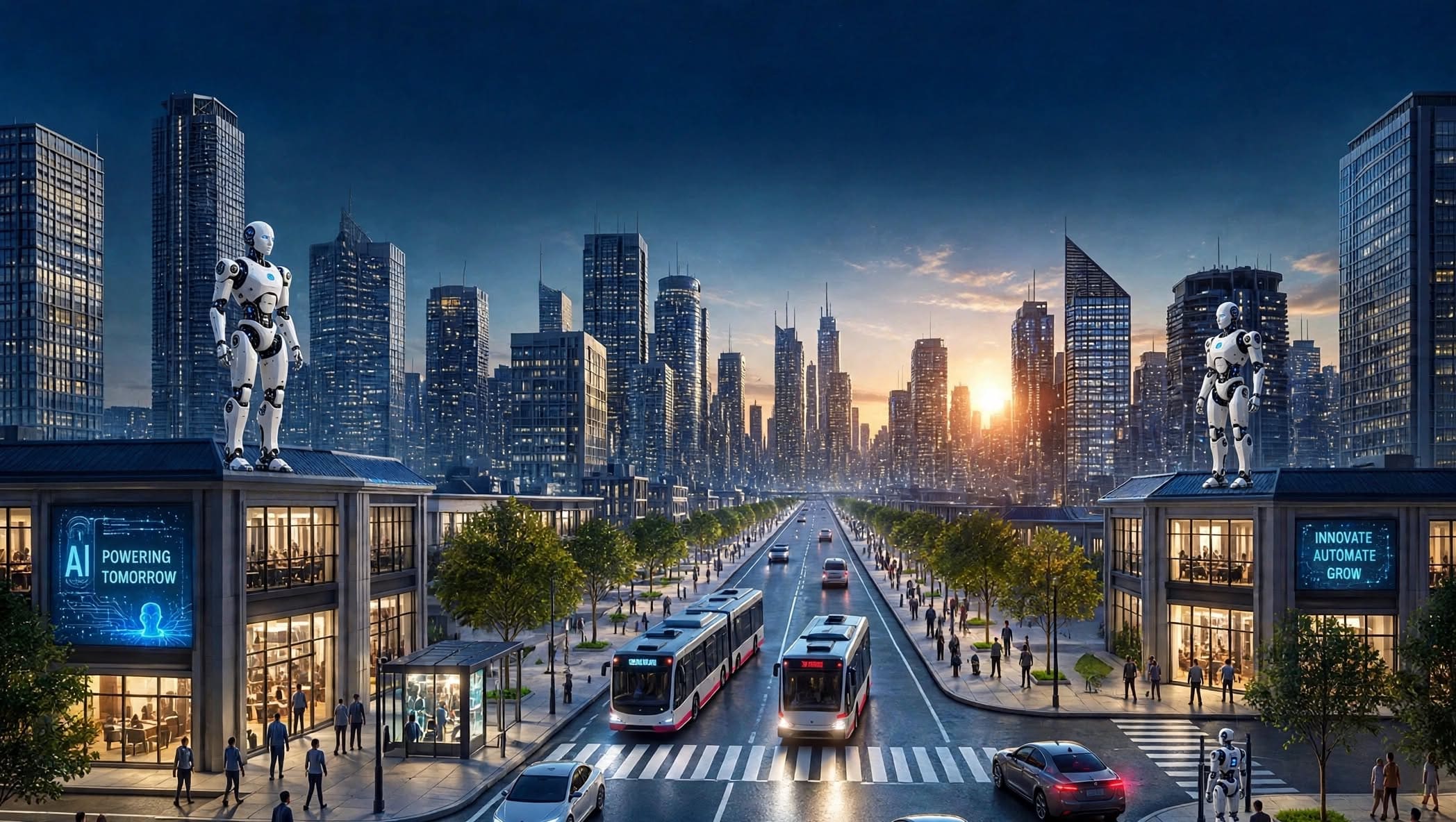

The Future of IT in 2030: Technologies That Will Shape Business
Last Updated: October 2026
Information technology is entering a new era of transformation. Artificial intelligence, automation, cloud computing, cybersecurity, robotics, advanced connectivity, and intelligent software are already reshaping the way organizations operate. Over the next several years, these technologies are expected to become increasingly integrated into business processes, products, customer experiences, and strategic decision-making.
By 2030, businesses are expected to operate in a technology environment that is significantly more intelligent, automated, connected, and data-driven than today. Rather than treating technology as a supporting function, organizations will increasingly view it as a core component of business growth and competitiveness.
Here are some of the key technologies expected to shape the future of IT and business.
Artificial Intelligence Will Become Central to Business Operations
Artificial intelligence is expected to remain one of the most influential technologies shaping business and IT through 2030. Organizations are already using AI for customer service, marketing, data analysis, software development, content creation, forecasting, and business intelligence. As AI capabilities continue to advance, businesses are likely to move from using isolated AI tools toward integrating intelligent systems across entire workflows. AI could assist employees with research, analysis, decision-making, customer interactions, and operational processes while providing real-time insights from large volumes of data.
AI agents could also become an important part of business automation. Instead of simply answering questions, increasingly capable agents may manage multi-step workflows such as lead qualification, customer support, scheduling, research, reporting, and internal operations with appropriate human oversight.
AI-Native Software Development Will Transform Application Building
The software development process is also evolving rapidly. AI-assisted development tools can already help developers generate code, identify errors, understand existing codebases, create tests, and accelerate repetitive development tasks.
By 2030, software development could become increasingly AI-native, with intelligent systems supporting much of the development lifecycle. Developers may spend more time defining requirements, designing architecture, managing security, evaluating AI-generated solutions, and ensuring application quality. This transformation is unlikely to eliminate the need for skilled developers. Instead, it could change how development teams work, allowing them to focus more heavily on problem-solving, system design, innovation, and delivering business value.
Cloud and Edge Computing Will Become More Integrated
Cloud computing will continue to provide essential infrastructure for businesses, but edge computing is expected to play a growing role in applications that require rapid processing and low latency.
Edge computing allows data to be processed closer to where it is generated rather than relying entirely on centralized infrastructure. This can benefit connected devices, industrial systems, smart infrastructure, autonomous technologies, and other real-time applications. The future is therefore likely to involve a combination of cloud and edge environments, enabling organizations to balance scalability, performance, security, and operational efficiency.
Cybersecurity Will Become More Intelligent and Proactive
As businesses become increasingly dependent on digital infrastructure, cybersecurity will become a strategic priority rather than simply an IT responsibility. The expansion of AI, cloud platforms, connected devices, and automated systems will create new opportunities but may also introduce new security challenges. Organizations will need stronger approaches to identity management, data protection, application security, access control, and threat detection.
AI-powered cybersecurity systems could help organizations identify suspicious activity, detect anomalies, analyze threats, and respond to security incidents more efficiently. At the same time, businesses will need to strengthen the security of their own AI systems and ensure that sensitive data is properly protected.
Robotics and Physical AI Will Expand Beyond Traditional Automation
The next phase of AI will not be limited to software. Advances in robotics and physical AI could enable machines to perceive their surroundings, interpret information, make decisions, and perform increasingly sophisticated physical tasks. Industries such as manufacturing, logistics, transportation, agriculture, healthcare, and warehousing could benefit from more intelligent robotic systems.
For businesses, this could improve productivity, operational efficiency, and workplace safety. However, it will also increase demand for professionals with expertise in robotics, AI engineering, system integration, maintenance, and human-machine collaboration.
Advanced Connectivity Will Enable More Intelligent Businesses
Connectivity will remain another important foundation of future IT. Emerging network technologies, including the development of 6G, could support increasingly connected environments involving people, devices, machines, vehicles, and digital services. Faster and more responsive connectivity could contribute to smart factories, intelligent transportation, connected infrastructure, immersive digital experiences, and real-time business applications.
For organizations, this means connectivity will increasingly become part of the broader digital infrastructure required to deliver intelligent and responsive services.
Businesses Must Prepare for a Technology-Driven Future
The future of IT will not be determined by technology alone. Businesses will need clear strategies for adopting emerging technologies while maintaining security, reliability, governance, compliance, and human oversight. Organizations can begin preparing by identifying business processes where AI and automation can provide measurable value. Investing in modern infrastructure, cybersecurity, high-quality data, employee training, and scalable digital systems will also help businesses adapt as technologies continue to evolve.
The most successful organizations are unlikely to be those that simply adopt the largest number of new technologies. Instead, they will be the businesses that understand which technologies solve real problems and how to integrate them effectively into their operations.
Conclusion
The future of IT in 2030 is likely to be defined by deeper integration between artificial intelligence, automation, cloud and edge computing, cybersecurity, robotics, software development, and advanced connectivity. These technologies could fundamentally change how businesses develop products, serve customers, manage operations, analyze information, and compete in global markets. However, successful digital transformation will require more than adopting new tools. Businesses will need a long-term technology strategy focused on innovation, security, adaptability, and measurable business outcomes.
For organizations preparing today, the opportunity is significant. Building a flexible digital foundation and understanding emerging technologies can help businesses respond more effectively to future changes and remain competitive in an increasingly technology-driven economy.
The future of IT will not simply be about having more advanced technology. It will be about using technology strategically to build smarter, more efficient, secure, and adaptable businesses.