
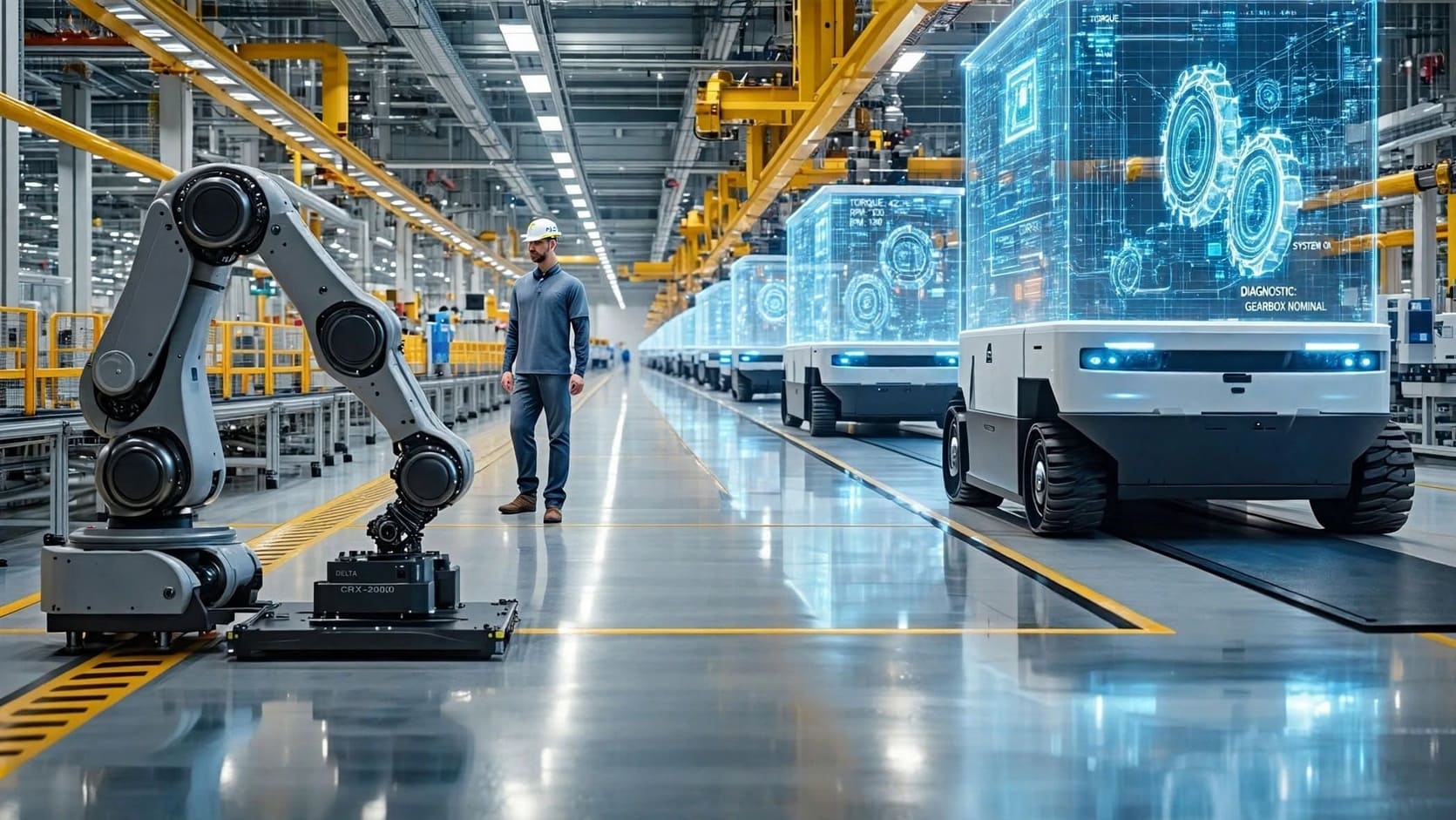

Physical AI in 2027: How Intelligent Robots Will Transform Business and Industry
Last Updated: October 2026
Artificial intelligence is moving beyond chatbots, digital assistants, and software applications into the physical world. This emerging development, known as Physical AI, combines artificial intelligence, robotics, sensors, and real-time data to enable machines to understand their surroundings, make decisions, and perform tasks in real-world environments. As businesses look toward 2027, Physical AI is becoming an important technology to watch across manufacturing, logistics, healthcare, and other industries.
What Is Physical AI?
Physical AI refers to intelligent systems that interact with the physical world through robots, autonomous machines, and other connected devices. Unlike traditional AI systems that primarily process information or generate digital content, Physical AI enables machines to perceive their environments and respond to changing conditions.
These systems can combine computer vision, machine learning, advanced sensors, and motion planning to perform tasks that require awareness of physical surroundings. Examples include industrial robots that handle complex manufacturing operations, autonomous mobile robots that move goods through warehouses, and intelligent machines that assist workers with repetitive or precision-based activities.
Key Physical AI Trends to Watch in 2027
Several technological developments could accelerate the adoption of Physical AI in 2027.
1. Intelligent Robotics and Automation
Businesses are increasingly exploring robots that can perform more flexible tasks instead of following only fixed instructions. Advances in AI models, computer vision, and robotics may help machines recognize objects, adapt to changing environments, and support more complex workflows. In manufacturing, intelligent robots could assist with assembly, quality inspection, material handling, and other operations. These capabilities may help businesses improve consistency while reducing repetitive manual work.
2. AI-Powered Warehouses and Logistics
The logistics industry is another important area for Physical AI. Intelligent mobile robots can help transport products, organize inventory, and support warehouse operations. When integrated with inventory management and logistics software, these systems can help businesses coordinate tasks and improve operational visibility.
In 2027, organizations may increasingly evaluate AI-enabled automation to address labor shortages, improve fulfillment speed, and manage growing order volumes. However, the benefits will depend on implementation costs, workplace requirements, and system reliability.
For example, a warehouse can use AI-powered robots to identify packages, navigate aisles, and move products between storage and packing areas. These robots can work with warehouse management software to help businesses organize inventory and manage orders more efficiently. Human supervision is still important to ensure safety and handle unexpected situations.
3. Smarter Manufacturing and Quality Control
Physical AI can also support smart manufacturing by combining sensor data, machine vision, and automated equipment. Intelligent inspection systems may identify product defects, while connected machines can provide information that helps teams detect potential equipment problems. By combining these capabilities with predictive maintenance and production analytics, manufacturers can make better-informed operational decisions and reduce avoidable downtime.
Benefits of Physical AI for Businesses
Physical AI offers several potential advantages. First, it can automate repetitive and physically demanding activities, allowing employees to focus on tasks requiring judgment, creativity, and collaboration. Second, AI-powered inspection and monitoring can improve consistency and help identify problems earlier. Businesses may also benefit from improved productivity, more efficient resource utilization, and better access to operational data. Nevertheless, results vary by industry, and organizations should assess the total cost of ownership before investing in robotic systems.
Challenges and Risks of Physical AI
Despite its potential, Physical AI presents important challenges. Deploying intelligent robots can require significant investment in hardware, software, infrastructure, maintenance, and employee training. Integrating these systems with existing business applications may also be complex. Safety and cybersecurity are equally important. Connected robots can introduce new security risks if their software, networks, or access permissions are not properly managed. Businesses must establish appropriate safeguards, test systems in controlled environments, and maintain human oversight for safety-critical activities. Workforce preparation is another priority. Employees may need training to operate, supervise, and maintain AI-enabled equipment effectively.
How Businesses Can Prepare for Physical AI in 2027
Organizations should begin by identifying specific operational problems that automation could solve. Rather than investing in robotics simply because the technology is trending, businesses should evaluate potential use cases, expected returns, safety requirements, and integration needs. Starting with a small pilot project can help teams measure performance before expanding deployment. Companies should also invest in employee training, reliable data infrastructure, cybersecurity controls, and clear accountability for automated decisions.
Conclusion
Physical AI represents an important evolution in how artificial intelligence can interact with the real world. As robotics, sensors, computer vision, and AI models continue to advance, businesses may find new opportunities to improve manufacturing, logistics, inspection, and other physical operations in 2027. Although adoption will depend on cost, reliability, safety, and practical business needs, organizations that evaluate these technologies strategically can prepare for the next generation of intelligent automation. Physical AI is not simply about building smarter robots; it is about creating more adaptive, efficient, and connected business operations.